
Police Pursuit: Burnout Rush!
Kwalee LtdArcade
4.66.35K Reviews
- Version
- 2.3.7
- Installs
- 10.00M
- Age Rating
- Everyone
Screenshots
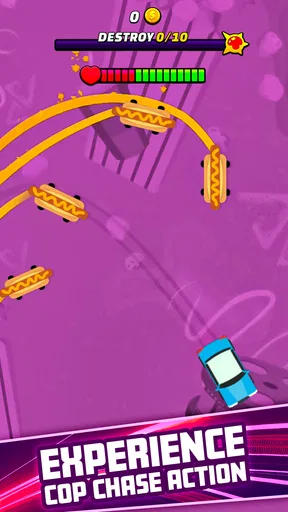
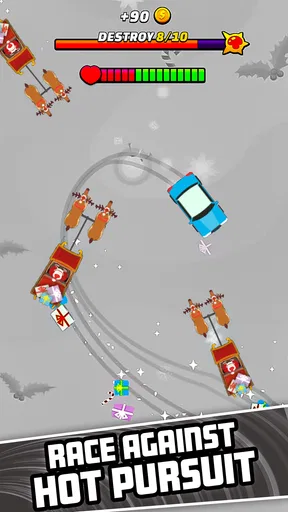
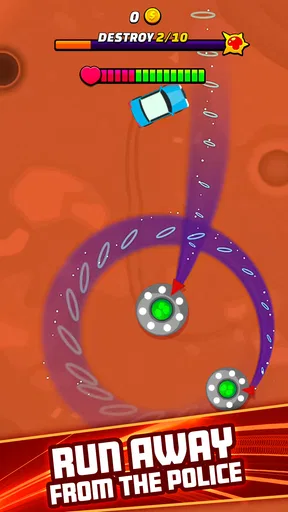
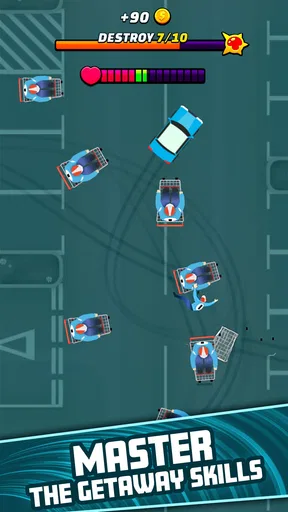

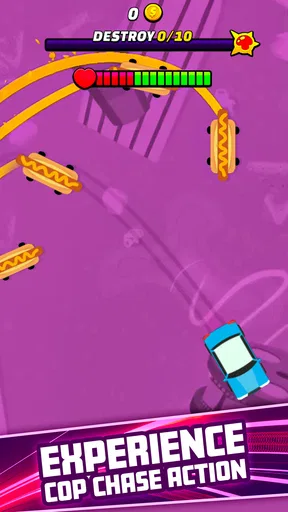
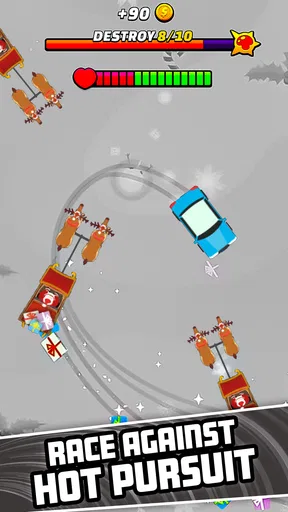
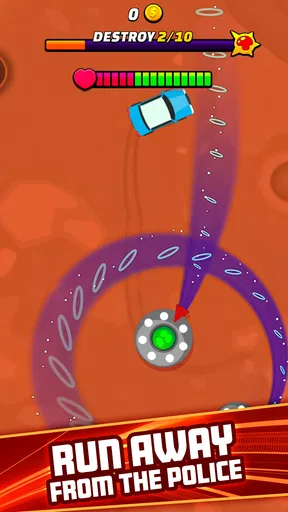
Our Review of Police Pursuit: Burnout Rush!
 Analysis by Appyee
I spent time with Police Pursuit: Burnout Rush! as a quick-play arcade game, and my first impression was clear: it is built around immediate action rather than a long tutorial or a complicated progression system. You get behind the wheel, try to stay ahead of the police, and rely on fast reactions when the road becomes crowded or the chase tightens. That simplicity is its biggest attraction, but it also explains why some players will enjoy it for short bursts while others may want something deeper.
Developed by Kwalee Ltd, this free game sits in the casual arcade space and is aimed at players who want a chase they can understand within moments. It is suitable for Everyone, runs on Android versions from 8.0 onward, and has reached over 10 million installs. Those figures make sense when you see how quickly the central idea communicates itself: there is no need to learn a large set of rules before the fun begins.
How the current version feels in everyday play
The current version is 2.3.7, and the experience remains focused on the basic pleasure of escaping pursuit. I found it especially easy to pick up when I had only a few minutes available. A short session works well while waiting for an appointment, taking a break from work, or winding down before bed, because the game does not ask me to remember a complicated story or prepare a detailed loadout before driving.
That accessibility does not mean the driving is completely mindless. The important skill is reading the road early enough to make a clean decision. When I reacted too late, a turn that looked harmless became a trap. When I moved too aggressively, I lost control of the situation instead of creating distance. The best runs came from staying calm, choosing a safe route, and resisting the urge to make every escape attempt dramatic.
The real appeal is the tension between simple controls and increasingly urgent decisions. You are not managing a full racing simulation, so the pleasure comes from timing, positioning, and the rhythm of a chase. That makes it approachable for younger players and for anyone who normally avoids racing games, while still giving experienced arcade players a reason to improve their reactions.
A good fit for short sessions
I would recommend it first to someone who likes compact arcade challenges rather than lengthy races. It is also a reasonable choice for a family device because the age rating is Everyone and the premise is easy to understand. A child can grasp the goal quickly, while an adult can still enjoy trying to beat a previous attempt through cleaner movement and better anticipation.
One realistic use case is a commuter playing with the sound turned down during a short break. The game’s chase format makes it possible to start quickly and stop without losing the thread of a campaign. That convenience is more important than it may sound. Many mobile racing games are built around longer events, menus, upgrades, or several layers of preparation; this one is more comfortable when I want action immediately.
There is a trade-off, though. If you prefer a racing game with licensed cars, detailed tuning, realistic handling, or a substantial career mode, this is unlikely to replace those alternatives. It is closer to a snack-sized arcade chase than a serious driving simulator. I would also skip it if your main reason for playing is to explore a large open world at your own pace, because the pursuit itself is the center of attention.
What I learned from the chase mechanics
The most useful adjustment I made was to stop treating every obstacle as something that required a last-second maneuver. Looking farther ahead helped more than simply tapping or steering faster. I began making small corrections earlier, which kept the car’s path more predictable and left me with options when the police pressure increased.
That approach also reveals an interesting weakness: the game can feel unforgiving when a mistake develops from a decision made several seconds earlier. A player may blame the final collision, but the real problem was often entering a poor line before the danger became obvious. For me, that gave the game a little more depth than its short description suggests, although players looking for generous, relaxed driving may find the same quality frustrating.
Another practical tip is to use the first part of a run as information-gathering rather than immediately chasing a perfect result. I paid attention to how quickly the road demanded a turn and which movements left me with room to recover. That made later attempts feel more deliberate. It is a small change, but it turns repeated failures into useful practice instead of random restarts.
Evolution, value, and the limits that remain
I see this section as a chance to weigh what the game’s continued availability means for players without assuming that a newer version changes its core design. I’ll also look at the practical value of trying a free, focused chase game and where its limited scope may matter more than its broad appeal.
What the release history tells existing players
The game was released on August 31, 2018, and the current 2.3.7 version shows that it has continued to exist as an active product rather than remaining frozen at its original launch state. I would not treat a version number by itself as proof of a specific feature or major redesign, but it does give current players a useful point of reference: when troubleshooting, discussing the experience, or deciding whether to return, make sure the installed build matches the current release shown for the game.
For someone who played earlier, the most important question is not whether the number looks larger, but whether the present version still delivers the same quick chase identity. In my experience, it does. The core appeal remains immediate arcade driving, not a shift toward simulation or a different genre. That continuity is helpful for returning users who enjoyed the original concept and do not want to relearn an entirely new game.
It also means expectations should stay realistic. A later version does not automatically turn a compact arcade title into a full racing package. Existing players who hoped for extensive customization, a richer narrative, or a more technical driving model should judge the game on what it is now: a fast, accessible pursuit game with a narrow but clear focus.
Free to start, with a point to consider
Police Pursuit: Burnout Rush! is free to download, which makes trying it uncomplicated. The game also includes optional in-app purchases priced from $1.99 to $3.99 per item. I see that as a reason to approach the title with a little awareness, especially if it is being installed on a shared family device. The sensible approach is to play first, decide whether the core loop is enjoyable without spending, and only then consider whether an optional purchase adds enough value for you.
For me, the free entry point is well matched to the game’s format. I can test the controls and decide quickly whether the chase feels satisfying. However, players who dislike any form of optional spending may prefer to avoid games that include purchases altogether, even when the initial download costs nothing. That is not a criticism of the driving itself; it is simply part of choosing the right kind of mobile game for your habits.
The public response is broadly positive, with an average rating of 4.6 from around 250 thousand ratings and roughly 6.3 thousand written reviews. I would read that as evidence that the straightforward chase format works for a large audience, not as a guarantee that every player will enjoy it. Ratings often reward immediacy and accessibility, while a player searching for deep racing systems may still find the experience too focused.
Where it compares well with other arcade racers
Compared with a traditional racing game, this title asks less of the player before the action begins. There is no need to understand a complex vehicle setup or learn a long list of track layouts to appreciate the basic tension. That makes it better than many conventional racers for quick breaks and casual play.
Compared with an endless runner, it has a stronger sense of pursuit. The police presence gives the movement a reason and creates pressure beyond simply surviving as long as possible. I found that difference useful: the chase made me think about escape and route choice, rather than only reacting to objects arriving from ahead.
On the other hand, a dedicated racing game will usually be the better choice for players who want structured competition, detailed car behavior, or a feeling of mastering a specific track. An endless runner may also be preferable if you want a more abstract reflex challenge with fewer expectations about driving. This game occupies the middle ground: more thematically focused than a generic runner, but lighter and less technical than a full racer.
Remaining friction before you install it
The narrow design can become repetitive if you play for a long uninterrupted stretch. I enjoyed the urgency more when I treated it as a series of short attempts. After too much continuous play, the same fundamental chase pattern had less impact, and I started making careless decisions simply because I was rushing.
That is why I would not present it as an all-evening game for every player. Its strongest use is as a compact arcade distraction, with improvement coming from sharper judgement rather than a large collection of systems. If you need extensive long-term variety, a broader racing title may hold your attention better.
There is also a learning curve hidden inside the simple premise. The controls may be easy to understand, but surviving consistently requires restraint. New players can be tempted to make constant movements, assuming that more activity means more control. I had better results when I used fewer, earlier corrections and accepted that not every risky opening was worth taking.
What returning and new players should watch
New players should watch how quickly the game communicates its rules. If the first few attempts feel too basic, give the decision-making a little time before dismissing it. The challenge is not in discovering a huge system; it is in turning a simple control scheme into reliable escape habits.
Returning players should watch the current installed version and judge the experience on its present handling rather than memory alone. A game played years ago can feel different after time away simply because your expectations have changed. In this case, the most useful question is whether you still enjoy short, pressure-filled runs, not whether it has become a completely different kind of racer.
I would also pay attention to how optional purchases fit your personal routine. Since the game is free with items in the $1.99 to $3.99 range, it is easy to begin casually, but it is still worth deciding in advance whether you want to keep the experience strictly free. That small boundary helps the game remain a low-cost break instead of becoming an impulse purchase.
Practical checks when a run feels off
If the game seems unresponsive, I would first separate a difficult chase from a technical problem. A run that ends after a late turn may simply be asking for earlier planning; trying a calmer line is more useful than repeatedly changing settings. If inputs genuinely seem delayed, closing other active apps and reopening the game is a sensible basic check before assuming the game itself is at fault.
On a device shared with family, I would also confirm that the phone or tablet meets the Android 8.0 minimum and that the game is updated to the current build. Those checks do not guarantee a perfect experience on every device, but they can rule out common setup mismatches. For a short arcade game, a stable connection is not something I would assume is needed during play; I would avoid diagnosing a failed run as a network issue without a clear reason.
When an unexpected interruption happens, I would treat the next attempt as a fresh run rather than expecting the game to preserve a moment mid-chase. The format is easiest to enjoy when I accept that a failed escape is part of the loop, pause briefly, and return with one adjustment in mind. That keeps retries purposeful and prevents frustration from turning into rushed driving.
There is a useful distinction here between a game that feels hard and one that feels broken. If the same kind of late correction keeps causing trouble, change the timing of your decisions. If the controls behave inconsistently across attempts, restart the app and check the device basics instead. I find that separating those possibilities makes troubleshooting less frustrating and gives the game a fairer test.
My final view is favorable, with a clear qualification. This is a good recommendation for anyone who wants an approachable arcade chase, quick sessions, and a little pressure without the preparation demanded by a larger racing game. It is less suitable for people seeking realistic driving, extensive customization, or a deep long-term campaign. With a 4.6 average and over 10 million installs, its broad appeal is understandable, but my own recommendation comes from the way it handles short moments: start quickly, make a few smart decisions, and try again when the escape falls apart.
Privacy and Permissions
See what permissions an app requests and how it handles your data.
- Wi-Fi connection information
- view Wi-Fi connections
- Other
- view network connections, full network access, control vibration, prevent device from sleeping
Verdict
Strengths of Police Pursuit: Burnout Rush!
- Fast-paced police chases make every round exciting.
- Simple controls are easy to learn within minutes.
- Short sessions suit quick gameplay breaks.
- Vehicle upgrades add a sense of progression.
- Colorful visuals keep the action easy to follow.
Limitations of Police Pursuit: Burnout Rush!
- Gameplay can become repetitive after extended sessions.
- Difficulty spikes may feel frustrating for new players.
- Ads may interrupt the experience between attempts.
- Limited customization reduces long-term variety.
- Some upgrades may require considerable grinding.
Other Releases by Kwalee Ltd
View All
Airport Security
Casual4.4

Teacher Simulator: Exam Time
Simulation4.5
Similar Picks in This Category
View All
Subway Surfers
SYBO Games4.6

Stickman Party 234 MiniGames
PlayMax Game Studio4.6

Subway Princess Runner
Ivy4.4

Temple Run
Imangi Studios4.2

Zombie Tsunami
Mobigame SAS4.6

Stack Ball - Crash Platforms
CASUAL AZUR GAMES4.5
Frequently Asked Questions
What is Police Pursuit: Burnout Rush!?
Police Pursuit: Burnout Rush! is an arcade-style driving game focused on high-speed police chases, dangerous escapes, and destructive road action. Players drive through traffic while trying to outrun pursuing police vehicles, avoid crashes, and maintain their getaway for as long as possible. The game is designed for quick, action-packed sessions rather than realistic police simulation.
How is the gameplay in Police Pursuit: Burnout Rush!?
Gameplay is built around fast reactions and vehicle control. You steer through busy roads, dodge obstacles, weave between traffic, and attempt to create distance from police cars. Crashes, tight turns, and sudden changes in traffic can quickly end a run, so success depends on timing and awareness. The arcade mechanics are easy to understand, but longer pursuits become increasingly challenging.
Does Police Pursuit: Burnout Rush! require an internet connection?
The game is generally suited to short, casual play sessions, and its core driving experience may be available without a constant internet connection. However, some features can depend on the version installed, including advertisements, updates, leaderboards, rewards, or other online services. It is best to launch the game once while connected and check its in-game requirements before relying on it for completely offline play.
Is Police Pursuit: Burnout Rush! free to download and play?
Police Pursuit: Burnout Rush! can typically be downloaded at no upfront cost, but free access may be supported by advertisements or optional in-app purchases. Depending on the edition and platform, purchases may provide additional vehicles, upgrades, bonuses, or other conveniences. Parents should review the store listing and device purchase settings before allowing children to play.
Is Police Pursuit: Burnout Rush! suitable for children?
The game is relatively simple to understand and does not require advanced gaming experience, making it approachable for many younger players. Nevertheless, it centers on reckless driving, police pursuit, collisions, and arcade-style destruction, so it may not suit every family. Check the age rating, advertising content, privacy information, and in-app purchase options on the relevant Android or iOS store before downloading.
Play our best games!


